


OpsBond — Operational AI Request a pilot
Operational AI for clinics

Models generate.
OpsBond operates.

OpsBond answers clinic enquiries in text and voice, turns each conversation into a complete request and hands it to the right person on your team. AI understands the customer; your rules decide what happens next.

Text + voice messages Multilingual Human-reviewed handoffs
Working Clinic productRecorded demo in English and Arabic
One conversation coreText and voice notes share context and state
Governed foundationsData and task foundations accepted, Sept 2026
Academic technical reviewsThree external computer-engineering academics
Why clinics need it

Every enquiry needs an owner and a next step.

Clinics work hard to bring in enquiries. Too many of them stall between the first message and the appointment.

Slow or missed repliesAfter hours, busy lines and too many channels to watch.
Lost contextDetails scattered across chats, calls and staff shifts.
Incomplete requestsNo clear service, time or contact, so staff have nothing to act on.
Follow-up by memoryWarm enquiries cool down when no one owns the next step.

With OpsBond

  • Replies in the customer’s language, by text or voice
  • Keeps context and corrections across the conversation
  • Builds a complete request: person, service, preferred time, contact
  • Names a person on your team for the next step
  • Never tells a customer something is confirmed when it is not
How OpsBond works

AI understands the customer. OpsBond follows through.

01

Understand

Multilingual text and voice-message input. Keeps context and corrections: “not Tuesday, Wednesday.”

02

Ground

Answers come from the clinic’s approved facts. Unknown prices or availability stay unknown.

03

Structure

Turns the conversation into a draft request: person, service, preferred time and contact. The customer confirms it.

04

Follow through

Hands the request to an accountable person, with the context and a tracked status.

How a request moves through OpsBond
Customer · textHi, I’d like a skin consultation next Tuesday afternoon.
OpsBond ClinicWe offer skin consultations. I can’t see live availability, so I’ll prepare a draft request for you to confirm.
Customer · voice note 0:05 Actually, not Tuesday. Wednesday is better.
OpsBond ClinicNoted: Wednesday afternoon. What’s the best number to reach you?
Customer · text+971 50 ••• ••17
OpsBond ClinicDraft: skin consultation · Wednesday afternoon · +971 50 ••• ••17. Nothing is registered yet. Send this exact request to reception? (Yes / No)
Customer · textYes
OpsBond ClinicSent to reception. This is not a confirmed appointment yet; the team will confirm the time with you.
RequestHuman review
Service
Skin consultation
Preferred time
Wednesday afternoon
Contact
+971 50 ••• ••17
Next step owner
Front desk · review

A request is not a confirmed appointment. It is confirmed only when clinic staff or the clinic’s own system confirms it.

See it running in the real product: watch the demo →

Use cases

Where OpsBond helps first.

We start with the front-desk workflows that lose the most enquiries, and label each one honestly.

Working

After-hours and busy-hour enquiries

Replies when the team can’t, and leaves a complete request ready for the next shift.

Working

Voice-note enquiries

Customers can speak instead of type. Replies come back by voice, in Persian today.

Working

Multilingual conversations

Text conversations in Persian, English and Arabic at tested scope, with context kept across turns.

Working

Booking requests and callbacks

Captures service, preferred time and contact, then hands the request to staff to confirm.

Next

Follow-up on unfinished enquiries

Policy-based follow-up when a customer stops replying before the request is complete.

Next

No-shows, recall and waitlist

Filling empty slots and bringing customers back, under rules the clinic approves.

See the full capability map with status and limits →

New vertical

Satellite methane watch for landfills.

Satellite plume detections from Carbon Mapper, UNEP MARS and NASA EMIT become cases with an owner, a field-check deadline, an audit trail and a signed Site Brief. Every number carries its source, capture time and uncertainty.

Illustrative map of five pilot landfill sites A stylised world map. A satellite moves along a dashed orbit while a scan line sweeps across. Pulsing markers show the pilot sites near Jeddah, Riyadh, Kuwait, Buenos Aires and Delhi. Jeddah Riyadh Kuwait Delhi Buenos Aires PILOT SITES · ILLUSTRATIVE MAP
Illustrative map of the five pilot sites. Not live data.

Satellite watch

Public plume detections near your sites arrive with their source, capture time and uncertainty attached.

Case workflow & approvals

Each detection becomes a case with an owner and a field-check deadline. Approvals and changes stay in the audit trail.

Tender & lead radar

Watches public tenders and leads for landfill gas and methane monitoring work, so the team sees them early.

Voice

Two voice capabilities. One business core.

Voice changes how people reach the clinic. It should not change the business rules, so voice is designed to reach the same governed core as text.

Clinic voice messages

Working · private

A customer sends a voice note. OpsBond transcribes it, continues the same conversation and replies by voice.

Voice note → local speech recognition → Clinic core → context kept → spoken reply
Spoken reply
Persian today; more languages next
Mode
Asynchronous voice messages, not a phone call

Realtime voice

Built · executed

Live microphone conversation with spoken playback, interruption handling, and language selection and locking.

Microphone → turn detection → realtime model → spoken playback
Runtime
Persian, English, Urdu, Hindi, Bengali
Human-tested
Persian, Urdu, English
Next
Phone-line deployment
Control

The smarter AI gets, the more control matters.

AI understands. Your rules decide. Models provide intelligence; OpsBond governs what can become operational truth or a controlled action, so the clinic stays in charge.

AI models & agents

Probabilistic
  • Understanding
  • Reasoning
  • Generating
  • Proposing

OpsBond control layer

Governed
  • Facts & state
  • Controlled actions
  • Policy & permissions
  • Human accountability
  • Authority & approvals
  • Evidence & history
Soft understanding.
Hard authority.

Language understanding can stay flexible. Business authority must stay governed. Models can improve or be replaced; the rules, approvals and records stay under the clinic’s control.

As AI moves from answering to acting, mistakes stop being wrong answers and become wrong actions. That is why a governed core matters.

Why OpsBond →
Trust

Built for high-trust operations.

Clinics cannot afford an assistant that sounds confident and gets the facts wrong. A request is not a result, and a sent message is not a confirmation. These safeguards are part of the product.

Requests stay requests

No appointment is presented as confirmed until staff or the clinic’s system confirms it.

Medical-safety routing

Reported symptoms pause routine booking for medical review. Urgent signs trigger emergency guidance and an urgent case for staff. No diagnosis or prescribing.

Unknown stays unknown

No invented prices, availability or provider details.

A person owns the next step

Every handoff has a named, accountable owner on the clinic’s team.

Revision history, not overwrites

Every change is a new revision that staff can see next to the previous one.

Data scope agreed first

Before any pilot we agree what data is used, which AI and speech providers process it and how long it is kept.

Built & tested

Operational data foundation

Canonical state, history and decisions live outside the model. Accepted and closed in September 2026.

Built & tested

Task foundation

Tasks are created and moved with full history and duplicate protection. Production functional check passed at its current scope.

External academic reviews

Reviewed by computer-engineering academics.

Three academics outside the OpsBond team reviewed selected architecture materials and controlled demonstrations in 2026.

OpsBond represents a serious applied AI project with a research-oriented systems direction.
Dr. Mohammad Ali TabarzadAssistant Professor of Computer Engineering
OpsBond represents a substantive software and AI systems engineering effort.
Dr. Mohammad Amin PirbonyehAssistant Professor of Computer Engineering
Maintaining canonical business state outside the language model and orchestration layer is a significant architectural decision.
Dr. Gholam Reza SetoodehAssistant Professor of Computer Engineering

Quoted with permission. Read the reviews in full →

Working with us

How a pilot works.

One clinic, one workflow, one owner on your team, and a decision you can measure.

Step 1

Discovery call

We look at one workflow you want to improve and who owns it today.

Step 2

Diagnostic

We map the workflow, your approved facts, the data scope and today’s baseline.

Step 3

14-day pilot

One channel, one owner, agreed limits and stop rules from day one.

Step 4

Decision

Continue, adjust or stop, based on the measures agreed at the start.

Stop rules come first. A pilot stops immediately on a false confirmed booking, an unsupported medical recommendation, wrong-recipient data or data use outside the agreed scope.

Questions

What clinics ask us.

Straight answers to the questions we hear most.

Is OpsBond a chatbot?

The conversation is the interface. The product is what happens after it: a structured request, kept context, corrections, and a handoff to an accountable person.

Does it book appointments?

It creates booking requests that the customer confirms and your team finalizes, so no one is told an appointment is booked before it is. Direct calendar integration is next.

Does it give medical advice?

No. It can share general information within a scope you approve. Reported symptoms pause routine booking for medical review, and urgent signs prompt emergency guidance and an urgent case for your team. Diagnosis, prescribing and clinical decisions stay with your clinicians.

Which languages does it support?

Text conversations have been tested in Persian, English and Arabic. Spoken replies to voice messages are in Persian today. The separate realtime voice prototype runs in five languages.

Which channels can customers use?

Telegram today, with text and voice messages. WhatsApp, Instagram and web are next, on the same governed core.

Won’t better AI models make this unnecessary?

No. Better models make OpsBond better, because its understanding layer uses them. But a model’s confidence cannot establish who is allowed to act, whether an approval is still valid or whether an outside system really accepted an action. Those answers come from governed state, policy and receipts. Why OpsBond →

How is this different from AI guardrails?

Guardrails constrain model behaviour, and prompt-level safety matters. OpsBond governs business authority, state and real-world effects: who may do what, for whom, in which state, and what proves it happened. The two are complementary.

Which AI models do you use?

We use leading language and speech models through replaceable adapters. The rules, approvals and records do not depend on any single provider, so models can be upgraded or swapped without changing how your clinic works.

What if a system or person doesn’t respond?

Nothing is reported as done. A request is confirmed only by your staff or your clinic’s own system; until then it stays open with a named owner. The architecture treats “unknown” as a real status to be reconciled, and a retry keeps the same action identity to prevent duplicate execution.

Does it replace our front desk?

No. It is designed to give your team complete requests and a clear next step, so staff spend their time on the conversations that need a person.

Where is our data processed?

Before a pilot we agree in writing what data is used, which AI and speech providers process it, where, and how long it is kept. Please do not send patient records through this website.

Where we’re going

Clinics are where we start.

The same governed core is built to carry revenue recovery, multilingual voice and, over time, a control layer for any AI that acts inside a real business.

Starting now

Revenue Recovery

Every enquiry gets an owner and an outcome.

Built · executed

Multilingual Voice

Natural spoken conversations on the same business core.

Platform

Trust & Control Layer

The governed layer AI models and agents pass through before they act.

Read our vision →   Why OpsBond →

Team

The people behind OpsBond.

Select a person to see their profile.

Vahid Nickmanesh

Vahid Nickmanesh

Founder & CEO AI systems builder · Trader · 12+ years running businesses

Founder-led product architecture, implementation, integration and execution.
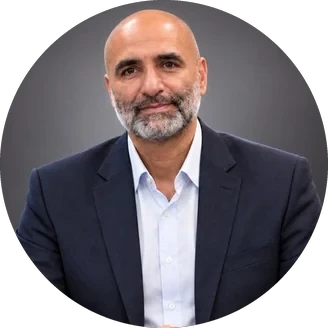
Dr. Mohammad Amin Shayegan

Dr. Mohammad Amin Shayegan

Head of AI Research & Evaluation PhD, University of Malaya · Associate Professor of Computer Engineering

Evaluation methodology, benchmark design, reliability analysis and technical review.
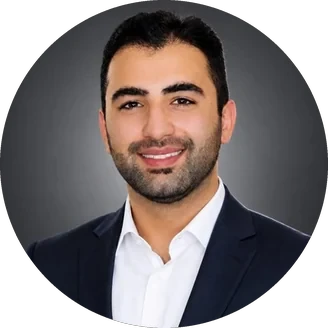
Behnam Shayegan

Behnam Shayegan

Technical Product Engineer

Operational analytics, KPI modelling, commercial and unit-economics support.

Vahid Nickmanesh

Founder & CEO · AI systems builder · Trader & business operator

Vahid Nickmanesh is the founder and CEO of OpsBond. He works across operational AI, business automation and voice systems, with an engineering background in electronics and ICT.

He personally leads OpsBond’s product architecture, implementation, integrations, testing and evaluation, and built the working multilingual text and voice prototypes himself: conversational workflows, operational state, human handoff, and voice input and output. He works with evidence-based testing, risk gates and non-regression controls.

He has also spent more than 12 years running customer-facing businesses: short-stay hospitality rentals, retail and food service, with direct responsibility for pricing, guest operations, occupancy, suppliers and service quality. That is where he learned what a missed enquiry or an unclear handoff costs.

He also owns and manages a Dubai free-zone trading company licensed for fresh-produce trading and e-commerce, which gives him an established UAE corporate base. There he develops cross-border produce trade into the UAE, including Al Aweer market intelligence, logistics-cost modelling and shipment economics, and has completed multiple food-product container shipments.

Alongside engineering, he has nearly two decades of music practice as an arranger, guitarist and band leader, with more than 30 compiled credits and public performance work dating to 2008. He is the author of the Gulf–Bandari 4/4 Notation System, an independent methodological work on documenting rhythmic timing. It shapes his quality bar for timing, turn-taking and natural interaction in voice products.

Builds with
n8n · Docker · Linux · PostgreSQL · PgBouncer · Redis · Python · APIs · AI model integrations
Voice
Pipecat · Gemini Live native audio · Silero VAD · SmartTurn · Deepgram Nova-3 · ASR/TTS
Operating
12+ years in hospitality rentals, retail and food service
Trade
Owner and managing director, Dubai free-zone trading company · food-product container shipments
Education
Bachelor’s degree, Electronics Technology Engineering, Islamic Azad University (2015–16)
Bachelor-level degree, ICT Engineering, Shiraz University (2010–11)
Associate degree, Electronics, Islamic Azad University (2007–08)
Qualifications
PLC (Grade 2) · Industrial instrumentation (Grade 1)

Dr. Mohammad Amin Shayegan

Head of AI Research & Evaluation

Dr. Mohammad Amin Shayegan is an Associate Professor of Computer Engineering with three decades of academic research, teaching and university leadership. He holds a PhD in computer science, in pattern recognition and data mining, from the University of Malaya.

His research covers pattern recognition, image processing and computer vision, Arabic and Persian character recognition (OCR) and data mining. He has published in international journals including Knowledge-Based Systems, The Journal of Supercomputing, Multimedia Tools and Applications and Signal Processing: Image Communication, and has supervised more than 60 graduate theses, many of them applied AI for medical imaging, recommender systems and security.

He has served two terms as Dean of the Faculty of Engineering and currently leads research and technology at his university, where he chairs the research council and sits on the incubator council.

At OpsBond he heads AI research and evaluation: evaluation methodology, benchmark design, reliability analysis, technical review and the responsible use of AI in operational workflows.

Education
PhD, Computer Science (pattern recognition and data mining), University of Malaya
MSc, Computer Engineering (machine intelligence and robotics), Amirkabir University of Technology
BSc, Electrical Engineering, Shiraz University
Academic role
Associate Professor, Department of Computer Engineering, Azad University, Shiraz Branch
Research
Pattern recognition · computer vision · Arabic/Persian OCR · data mining
Supervision
60+ master’s theses and doctoral research
Books
Two university textbooks: programming in C and Pascal; logic circuit design

Behnam Shayegan

Technical Product Engineer

Behnam Shayegan works on OpsBond’s commercial and product side: operational analytics, KPI modelling, the ROI and unit-economics framework for pilots, and technical product support.

Focus
Product analytics · KPI design · unit economics · technical product support
Request a pilot

Start with one workflow worth measuring.

One clinic, one workflow, one operational owner and one measurable decision.